Disability Awareness Silhouette Clipart
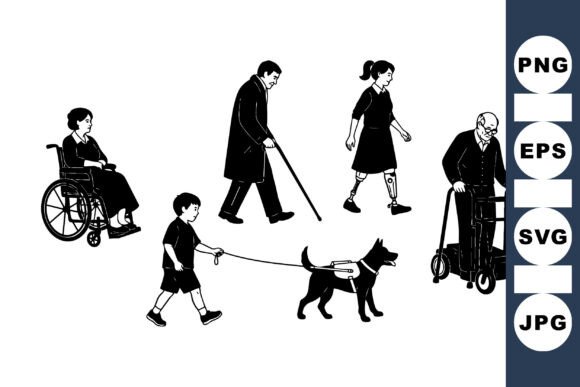
As an embroidery designer and product reviewer, I’ve evaluated countless machine embroidery designs. Disability Awareness Silhouette Clipart stands out for its thoughtful composition and meaningful message. This black and white vector art features diverse disabled individuals using mobility aids like wheelchairs, canes, prosthetic legs, and walkers, along with a guide dog. The design conveys empowerment and inclusion in a way that feels authentic and respectful.
First Impressions: A Design That Speaks Volumes
The moment I viewed Disability Awareness Silhouette Clipart, I noticed the balance between simplicity and detail. The shapes are clean, making it ideal for embroidery where clarity is key. The layout is well-structured, allowing for easy placement on various items without feeling cluttered. The visual personality of the design is serious yet hopeful, which makes it suitable for both personal and commercial use.
This design naturally fits into projects that aim to make a statement—whether it’s a custom embroidered tote bag for a social cause, a sweatshirt for a nonprofit event, or a baby onesie with a meaningful message. Its black and white aesthetic also gives it versatility, as it can be adapted to different color schemes or used as a base for further embellishment.
Real-Life Embroidery Use Cases
When considering real-life embroidery situations, Disability Awareness Silhouette Clipart works best on larger, flat surfaces. For example, a tote bag design or a sweatshirt embroidery would allow the details to shine without being lost in the fabric. It also pairs well with applique designs, where the silhouette can be layered over a contrasting background for added depth.
On smaller items like caps or patches, the design might require some adjustments. If the hoop size is too small, certain details could become distorted or too dense. In such cases, simplifying the design or adjusting the stitch density might be necessary to maintain quality.
For baby clothes or nursery decor, the design’s clarity is a plus. It can be used as a subtle but powerful motif on onesies, blankets, or pillow covers. However, care should be taken when working with thin or stretchy fabrics, as the design may not hold up as well during washing or wear.
Where to Use With Caution
While Disability Awareness Silhouette Clipart is versatile, there are areas where it requires careful consideration. On dark fabrics, the black and white contrast may not be as visible, so testing with different thread colors could be beneficial. Similarly, on textured or thick fabrics, the design may not sit as smoothly, requiring additional stabilizer support.
Curved surfaces like caps or hats can be challenging for intricate designs. If the silhouette is placed near the edge, the stitching might pull or distort. It’s also important to avoid using the design in areas with high friction, such as elbow patches or seat areas on pants, where frequent movement could cause the stitches to fray.
Dense stitch areas or tiny lettering could be problematic if the design isn’t optimized for the intended fabric. Always test the embroidery file on scrap fabric before committing to a final project. This ensures that the design will look as intended and perform well under real-world conditions.
Impact on Visual Appeal and Customer Perception
Disability Awareness Silhouette Clipart has a strong visual appeal that can elevate any handmade product. Its clean lines and symbolic imagery create a professional look that resonates with customers looking for meaningful, inclusive designs. When used on custom apparel or personalized gifts, it adds a layer of thoughtfulness that can increase customer trust and engagement.
For small business owners and Etsy sellers, this design offers a unique selling point. It can be used in craft fair products, boutique branding, or digital product previews. Its universal message makes it appealing to a wide audience, which can help boost sales and brand recognition.
However, the success of the design depends on how it’s presented. A poorly executed embroidery project can diminish its impact, while a well-stitched finished product can turn it into a standout item. Ensuring proper stitch density, using the right stabilizer, and selecting appropriate thread colors are all critical steps in maintaining the design’s integrity.
Practical Designer Notes
Before using Disability Awareness Silhouette Clipart in your next embroidery project, here are a few practical tips:
- Test on scrap fabric first to see how the design looks and behaves on your chosen material.
- Check thread color contrast to ensure visibility, especially on dark or light backgrounds.
- Review stitch density to avoid overcrowding or weak areas in the design.
- Confirm hoop size to ensure the entire design fits comfortably without distortion.
- Inspect small details to make sure everything is clear and well-defined.
- Test in black and white mockups to see how the design translates to different fabric types.
- Compare light and dark fabric backgrounds to determine the best presentation.
- Use proper stabilizer to prevent puckering or shifting during stitching.
- Verify licensing before selling finished items or digital products to avoid legal issues.
Disability Awareness Silhouette Clipart is a powerful design that can enhance a variety of embroidery projects. Whether you're creating a handmade product, a personalized gift, or a commercial embroidery asset, it offers both visual and emotional value. Just remember to approach it with care, test thoroughly, and ensure it aligns with your brand’s goals and customer expectations.